Journal Reflection of session 1Journal Reflection of sessions 2,3 and 4
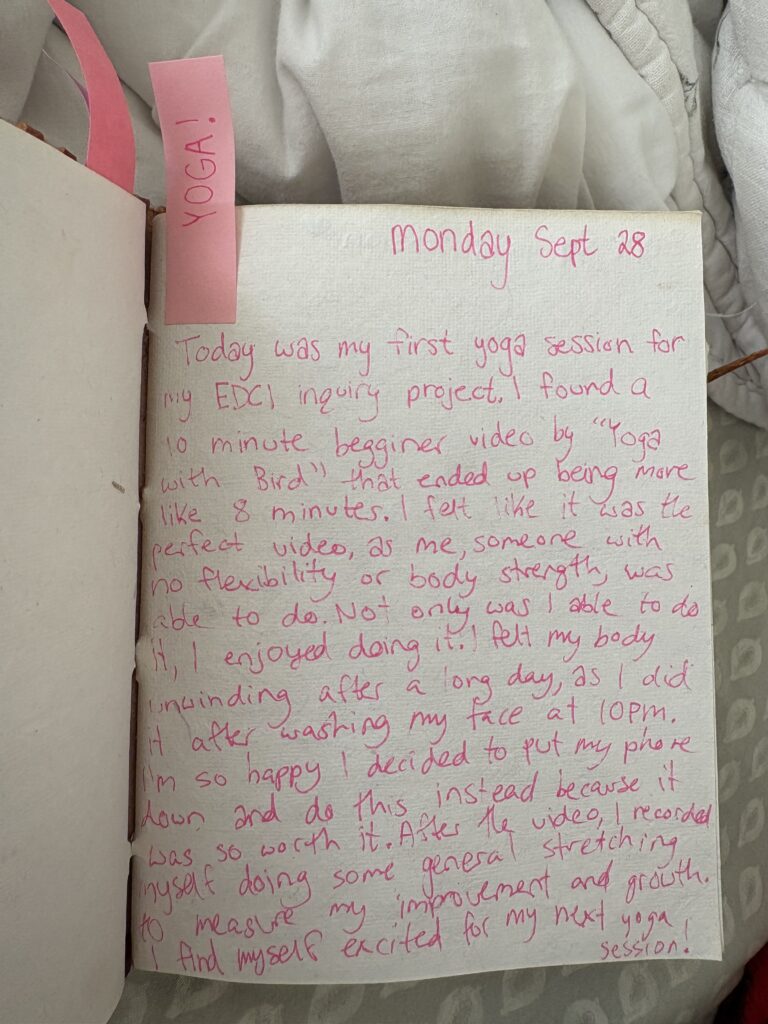
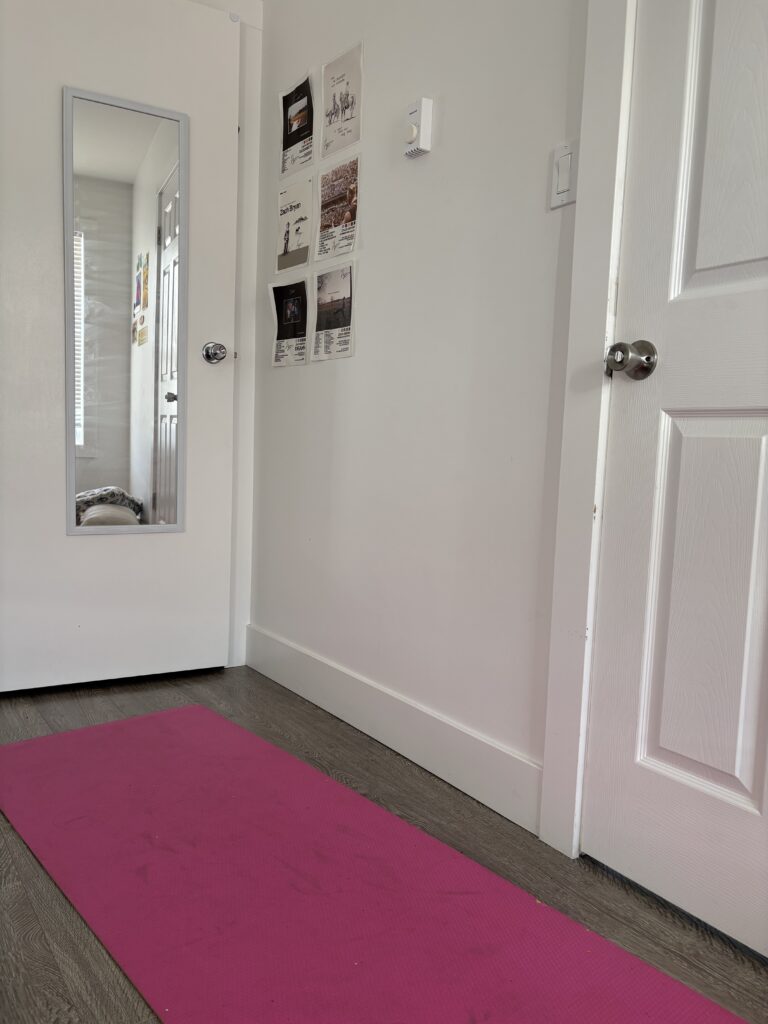
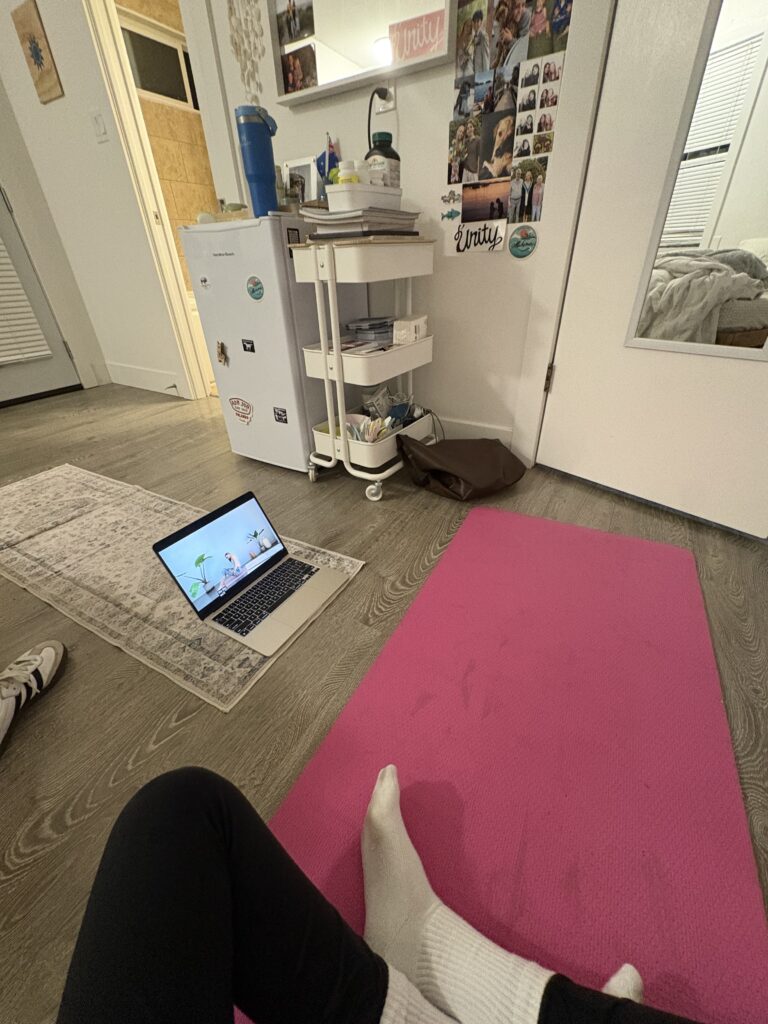
For my Free Inquiry Project I have chosen to do yoga and more specifically, working on my flexibility, balance and regulating my nervous system. I have been looking for an opportunity to get into yoga as I think the activity would be beneficial to both my mental and physical health. Going into this project, my goal is to have a yoga session every other day and start at a beginner level and advance to a more intermediate level towards the end. I will rely on YouTube videos for the beginning but at the half way point I would like to lead some of my friends in a beginner level yoga session and then for the last couple weeks I am aiming to be able to create my own intermediate routine from stretches and poses I have adapted along the way. I am hoping this project will hold me accountable to remain consistent with my goals and I am looking forward for the journey and curious to see the end results after a few months.
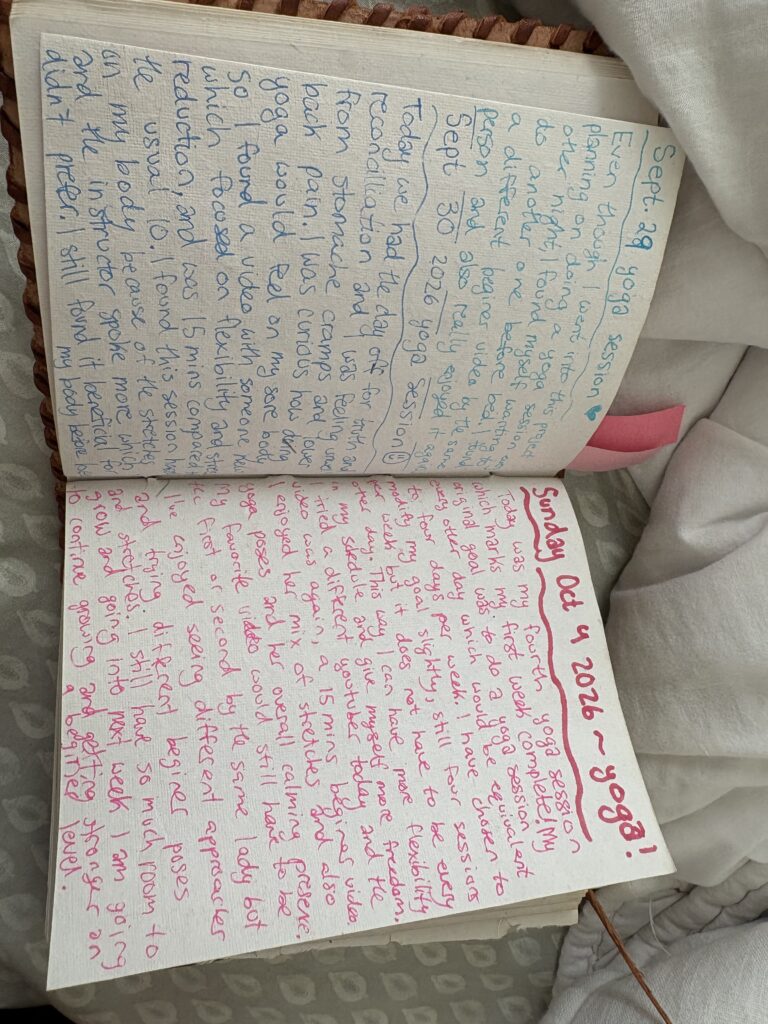
I started my project on Monday, September 28th and did a following three sessions on the 29th, 30th and October 4th. Although I aimed to do a yoga session every other day, after completing my first week I have decided to adapt and keep the goal at four sessions per week but the dates do not matter. This change will allow for my schedule to be more flexible and not put so much pressure on the schedule itself. For example, four continuous days is fine but so is four broken up days over the span of a week. I am going to continue to hold myself to the expectation of reflecting in my journal after each session as it has proved to be a helpful cool-down tool. Other than the change to the “every other day” aspect, I have found the plan I created for my Inquiry Project to still be going strong. As I continue throughout the following weeks, I will adapt if necessary but for now everything seems to be going well.
I have deeply enjoyed my yoga sessions so far and already seen immediate results such as, a calm body before going to bed and progress in my deep breathing. Some areas I look forward to seeing growth in are my balance, flexibility and strength. Yoga is harder work than I thought and not just peaceful breathing; it also requires full body strength and hard work. I love the feeling of knowing I have taken the time of doing a yoga session instead of scrolling on my phone before going to sleep and it has positively impacted my ability to go to sleep which was an unexpected pro. I am looking forward to continue to see my progress in week #2 and hope to meet my goal of four sessions next week.
Going into week #2 I would like to remind myself that long-term progress such as flexibility, balance and strength take time and will not happen overnight. Part of me wants to be the “best” at yoga so I can do all the same poses and stretches as the instructor but that is not realistic and I am just starting off. Consistency will help me reach my goals there is no reason to add any extra pressure to something that should only be adding calm energy to my life and well-being. I am going to continue watching beginner level videos and try to continue to grow my abilities in the simple stretches and poses so I can develop a strong foundation to grow off of. I also hope I am able to determine which instructors I respond better to so I can begin to have a pattern I become familiar with. I am curious to see my growth and shortcomings in next week’s blog post.
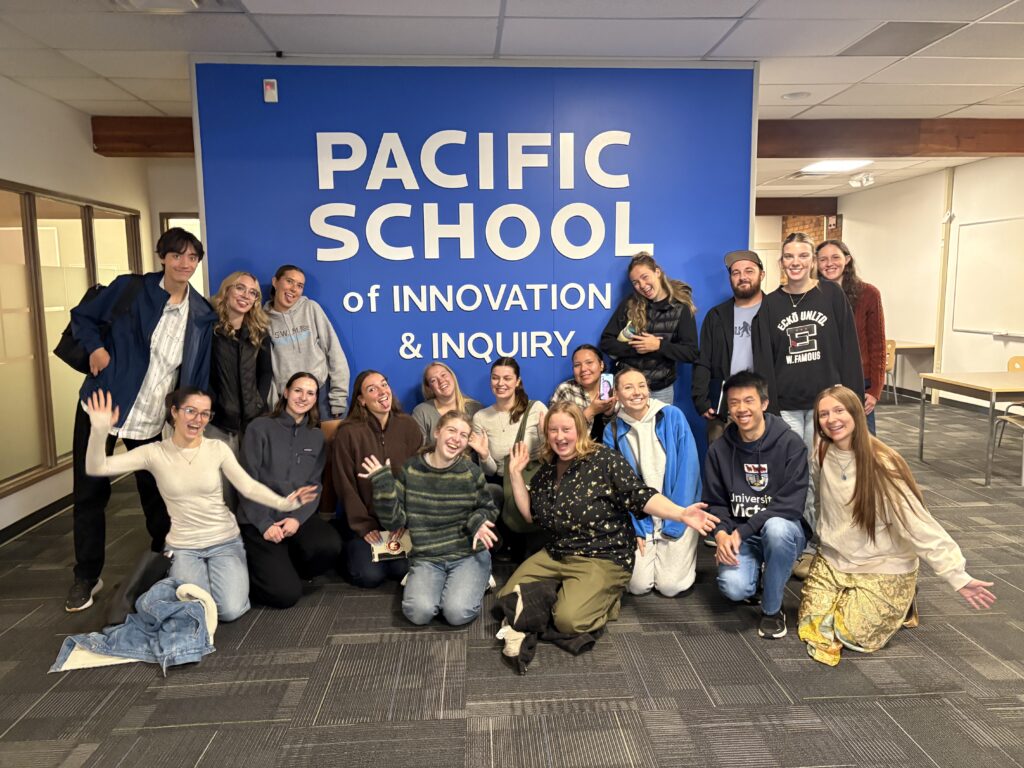
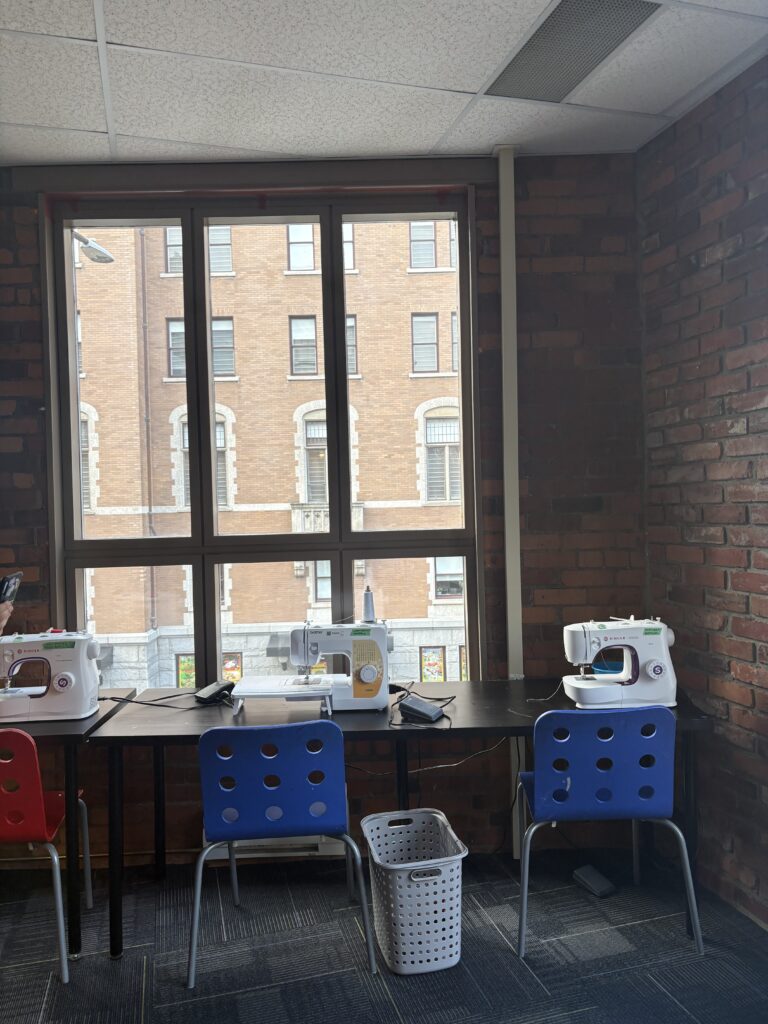
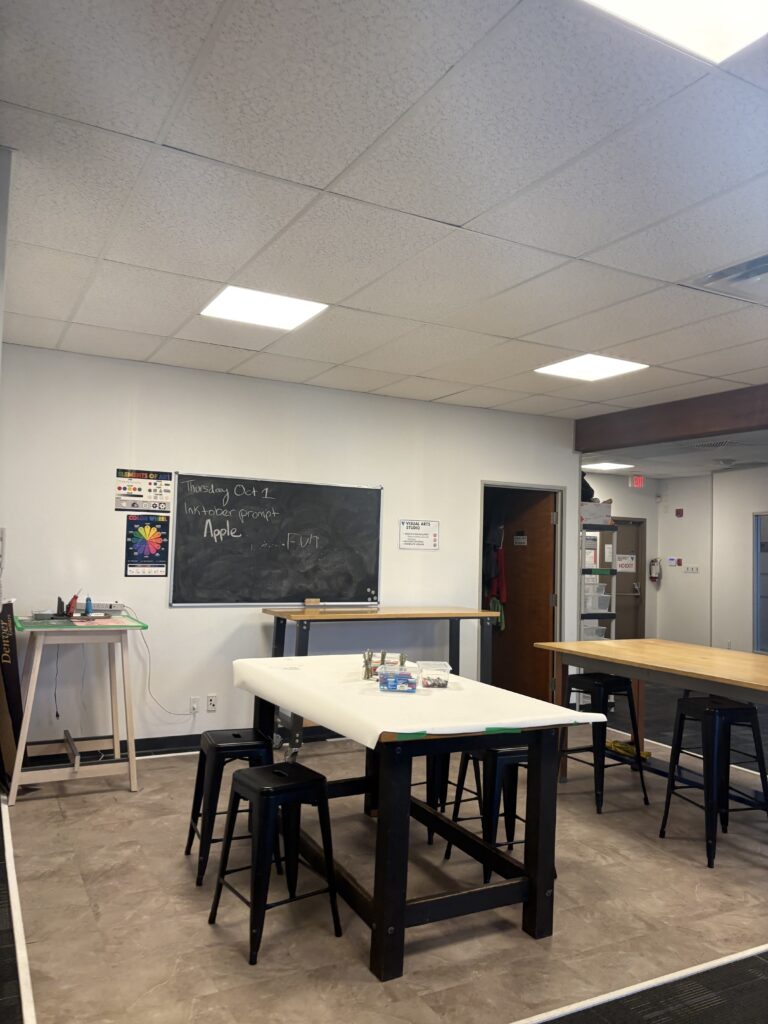
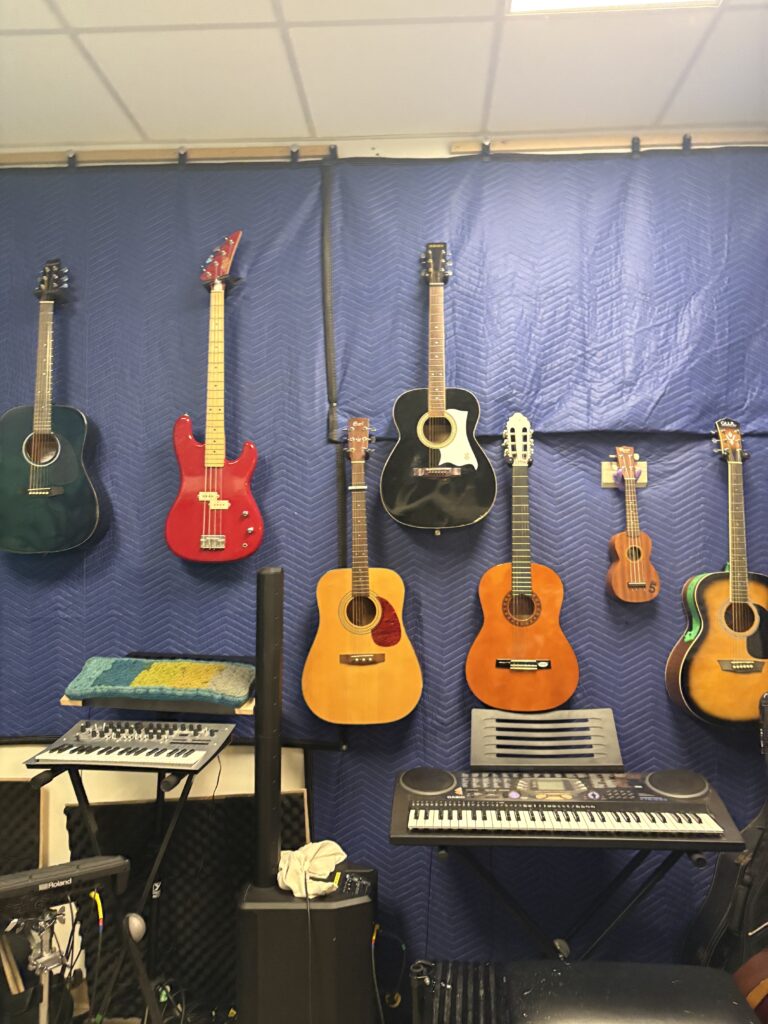
In this week’s class we did something different than our usual online session and took our learning in-person to Pacific School of Innovation and Inquiry. We got to tour the building, learn about the style of education and ask questions to the founder and principal, Jeff Hopkins. This experience was awesome for immersing ourselves in the different types of learning styles and I was deeply grateful for the opportunity to visit PSII.
Some of the learning strategies and approaches that stood out most to me was the fact that students have so much control and responsibility over their learning. For example, Jeff shared how students get to choose what classes they want to spend their time in and what type of projects they want to devote their time to. There are no bells, class schedules, designated lunch periods or anything under the umbrella of students not having their own freedom of autonomy. Instead of attendance, students sign in and out at the office and if they need to take a walk around the block, all they have to do is sign out and then they are free to leave. The school and faculty put so much trust in their students in the hopes of providing them with a positive learning experience. While kids are in grades 9-12 at PSII, students are often not even aware of their peers grade level because all collaborative learning happens school wide, not grade focused. This education style meets students where they are at instead of where the curriculum expects them to be and gives students the opportunity to have a say in what they are learning which promotes genuine interest and motivation in students. There were so many interesting approaches to learning in PSII that I didn’t know were even possible and I found our visit incredibly fascinating.
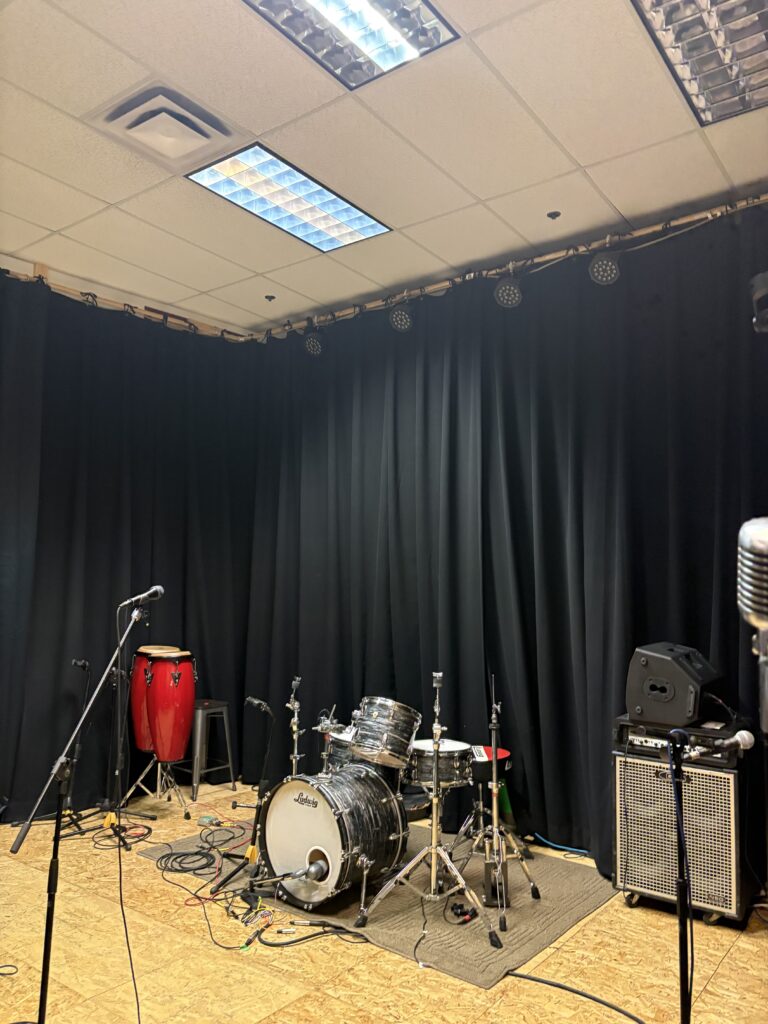
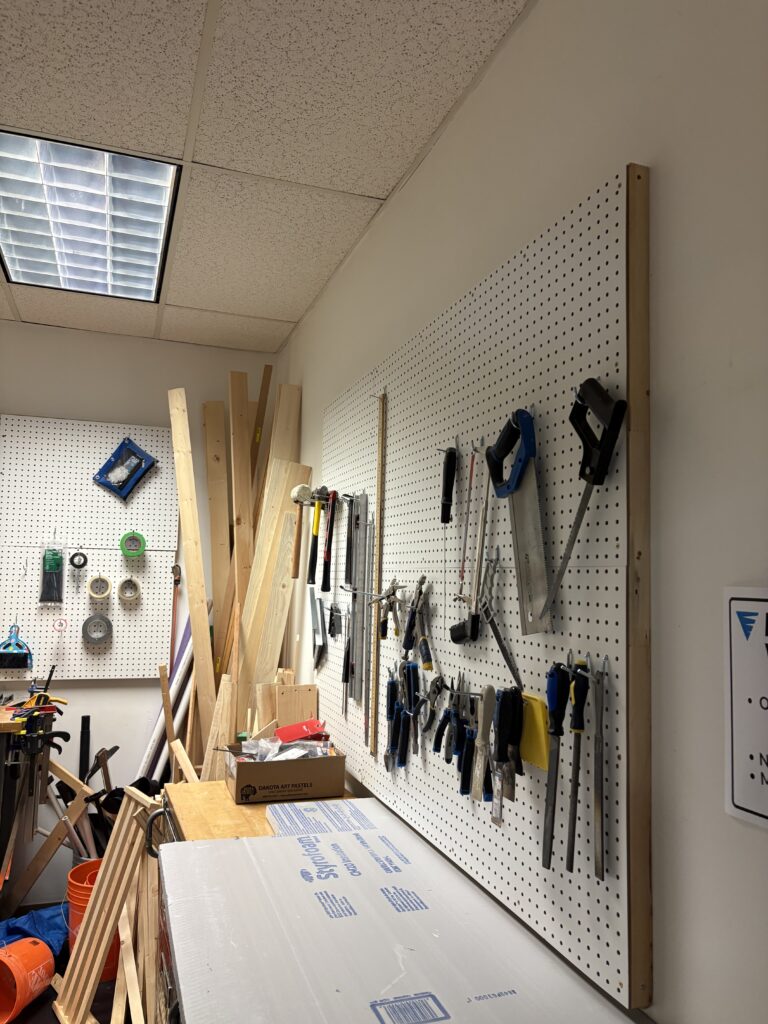
I appreciated and found myself aligned with many of the core values and approaches done at PSII. I saw lots of benefits of giving students freedom over their work. I think it encourages authentic care and effort because students will be learning about topics that sincerely spark fascination in their minds. I also think PSII inspires students to be creative and responsible at a young age because of the professional and personal independence they are given. They had so many amazing resources available for students like ceramics with kilns and wheels, recording studios, fashion materials, musical instruments, woodworking tools and more. Jeff recognized that many of the students at PSII are neurodivergent and I think it’s cool that this school has provided a safe and welcoming space for different learners who may not have found themselves aligned with more traditional schooling. Lastly, Jeff had mentioned how teachers are able to work one-on-one with students and have at least four meetings with a student per week to discuss the development of their projects/learning. Teachers at PSII have the time and resources available to them to allow for all of their work to be completed during the school day which contrasts heavily to other school systems. Instead of going home and still having marking and lesson planning to get done, your schedule is free for you to decompress and set yourself up for success for the following day which in turn will also benefit your students. As a future teacher I see so much value in that approach and appreciated Jeff taking the time to recognize how important it is for teachers to have time to themselves.
While there were many aspects of PSII I found myself aligned with or that I learned from, there were also parts I did not necessarily fully understand. For example, while the creative freedom and independence may be beneficial for some students, I think other students require extra direction, support and socialization that PSII does not offer. I also think the separation of grades in traditional schooling is a positive factor because different grades help differentiate varying skill levels and reduce comparing between peers. The lack of lectures/teacher to student teaching may not set students up for success in post-secondary schooling like university which is majority lecture styled learning. Finally, I am not sure if I fully understood how students were able to complete the required learning outlined in BC’s curriculum with the independent/inquiry project based learning. I think some of my views contrast to PSII’s learning because I don’t think one style learning is the right answer for all students but to be fair, Jeff shared how some students find that this learning strategy at PSII is not for everyone.
Finally, I think the Pacific School of Innovation and Inquiry is a beautiful educational space that supports learners who thrive with independent work and fosters self-reliance and imagination. I thoroughly enjoyed the time I spent at PSII and learnt tools I can take into my education path to set myself and my future students up for success and growth.
In this week’s class we did Impromptu networking, discussed FIPPA, privacy and security, dove deeper into conversations about meta and AI and more specifically Bill C-22 and lastly, thought about how we can disconnect from harmful technology. This week’s learning felt heavy and slightly stressful, but also promoted important conversations that I sometimes avoid because it feels overwhelming.
To start class off we tried something I had never heard of, Impromptu Networking. This practice encourages sharing your struggles, in this case our challenges related to EDCI 336, with a partner. I enjoyed this structure for many reasons. I found myself more at ease knowing my peers were also confused with the same parts of this course as me and I felt less isolated in my struggles. I can quickly feel overwhelmed and as if I am falling behind in classes and I struggle to ask for help so hearing other people voice their same challenges was reassuring. Since we got to speak with multiple people, I bonded with some of the individuals regarding our similar struggles whereas my other peers were able to provide me with assistance and guidance. The last aspect of this structure I enjoyed was becoming more familiar with the people in my working environment and building connections with people I share classes with. While I had not been familiar with the term “Impromptu Networking” I have done similar exercises in other classes and I enjoyed this activity because of the general helpfulness, reassurance and social component.
When discussing FIPPA, Privacy and Security Colin provided us with a few websites to try out. The first is called clickclickclick.click which was a website that recited everything you did back to you. For example if you click a button, it knew that, if you scrolled up, it knew that, if you moved your mouse, it knew, how ever long you were on the website for, it would tell you. The website knew all your behaviours and a voice would tell you your patterns and it felt like it was in my brain or something. The next website was called “Since you arrived” and this one would tell you so much about where you currently are and where you are accessing the website from. For example, my location, IP address, the wifi and device I was using, where I accessed the link from, the battery of my device and much more of what I thought was personal information. The last website was called Privacy.net and this one had access to what they called my “Basic info” which was my IP address, my location, my internet access, my device but then it also showed me the information about my finger print that they had access to. Part of me always knew the information that websites had access to but seeing it in front of me and how quickly it was found left a sick feeling in my stomach and creeped me out. It made me feel like there was a little person inside of my computer and I was being watched. Something this activity made me think back to was when websites ask for access to cookies and I always just say yes because I don’t know what it means but now I’m curious what exactly I’m giving access to. Something that brings me a little peace surrounding my safety is that everyone who uses technology or is active in the online world is vulnerable to this. I don’t know who is collecting this data but whoever it is does not only have mine, so that makes me feel less alone. I feel somewhat helpless surrounding this issue because so much of today’s world is online and it feels like there is very little I can do about that. I am not a tech savvy individual and solving this issue feels far out of reach for me; I’m not sure if that is an ignorant position to take or if I am just being realistic.
Next, we discussed meta, AI and Bill C-22 in Canada. In the article titled “Everything is spying on you and there is no opting out” by the Verge, Janus Rose discusses how the number of AI devices that can record and listen to its surrounding environment, such as meta glasses and Apple Watches, is growing rapidly. I am not too knowledgeable surrounding Apple Watches but I have seen quite a bit of discourse around meta glasses and I think they are a violation of people’s privacy and waste of resources. In my opinion, they don’t add anything beneficial to society and only are used for superficial reasons on social media. I’m strongly against the rising trend of filming people with meta glasses in a public setting, posting the content and then supporting hate towards the individuals who did not consent to being filmed. I think people who record others using meta glasses or as the article points out, now also Apple Watches, take advantage of people’s obliviousness or unfamiliarity with a product and I am yet to see a positive impact made with this new technology. I am aware this opinion might seem harsh or fixed but I am open to seeing how these products could be used to help others for the better. Although, I still stand firm in believing that instead of continuing to develop new AI tech, these resources should be put to helping injustices that truly do matter. As for bill C-22 I don’t have a strong opinion on the matter but I can see both sides of the conversation. On one hand if this is a useful tool for police in Canada, that is beneficial for keeping people safe and protected if used correctly. The world is moving more and more digital everyday and systems need to have access to resources that help them keep up. While saying that, everyone is entitled to privacy and feeling comfortable in personal spaces and not to mention, we have seen what it looks like when powerful systems abuse their access to powerful resources/tools. It is a complicated conversation that I do not even begin to have the answers to but I think with strict rules and boundaries it could be helpful.
The last topic we explored in this week’s class was disconnecting from technology and more specifically, the power the government holds over society in terms of the online world. The article we were given in class focuses in on the United States technology companies and how important it is for us to detach wherever possible. Our lives are so intertwined with American services that unfortunately we will always be somewhat linked. This is an issue to me that again, feels too big for me to deal with or make a significant difference. I feel as though systems are too stuck place for change and realistically the people with money and rank are truly the only ones who could propose change. I feel somewhat stuck as hopeless as it sounds and personally, there are other issues I feel more passionate about.
Overall, week #2’s discussions felt stressful but still critical topics to converse about so awareness can continue to be raised. This week’s class left me with anxiety and more questions than answers but I think that may be better than my usual compliance out of fear of finding out what I am involved in surrounding the world of technology. They are difficult and somewhat depression conversations but the louder the noise, the harder it is to ignore.
In the first week of EDCI 336 A01, we discussed a myriad of topics including RSS, the “Most Likely to Succeed” documentary, an article regarding AI teaching kids and a slam poem by Taylor Mali. These subjects are important conversations for teaching candidates, such as ourselves, to be having. Discussing controversial topics will begin to help properly prepare us for real-life classroom and student experiences and interactions.
The documentary “Most Likely to Succeed” takes place at High Tech High in San Diego and focuses on two ninth grade students working on projects. The school has unique approaches to education compared to majority of tradition high schools. Instead of standardized testing they have project based learning, they focus on collaboration instead of individual work and teachers work with students as guides more so than instructors. I think the documentary was valuable to see different teaching strategies because I had not seen some of the methods in action before. As a student in high school, I would have appreciated having creative freedom with my work and the opportunity to demonstrate my knowledge in a unique way compared to memorizing knowledge just to forget it after a test. I wonder if graduated students from High Tech High felt properly prepared for university course work after having applying their knowledge differently for so many years. Post-secondary is a stressful time for everyone and the additional academic stress could potentially add pressure that leads to burnout. As teachers, it is our responsibility to set students up for success and I am not sure if High Tech High’s approach fully considers that. There are pros and cons to both education systems and I think the tricky factor is that there is no right answer for everyone. All students learn and preform differently, ideally as educators we are able to find balance for our students to thrive.
RSS stands for Really Simple Syndication and is a technology that allows you to receive updates from websites, blogs or other sources of your choice. I am yet to try RSS but I think it could be a very helpful tool out of convenience because all of your favourite sources could be in one place which prevents you from hours of doomscrolling and distractions. You are choosing what type of content you would like to see which could be helpful with managing social media and screen usage with young audiences. From what I know about RSS, I don’t see any negatives and I wonder why it is not a more common tool used in today’s online world.
The article “Alpha School wants AI to teach a billion kids. Should it?” compares Waymo, a self-driving car company to Alpha School, a private school that uses AI models to educate children. I strongly disagree with AI teaching students because so much of the schooling experience from K-12 is exposing children to socialization, connection, fostering community and healthy communication skills which is something that can’t be taught by a thing that does not feel. While that is the most stand-out concern for me, there are also other valid worries. If AI continues to rise in popularity in classroom settings, millions of teachers positions are at stake, not to mention the tuition for an institution like Alpha School ranges from $40-75,000 a year which is no where near realistic for well over majority of the population. The idea of this model aiming to reach a billion kids should be highly alarming for everyone and not a conversation we turn a blind eye to or avoid out of fear.
In the poem “What Teachers Make”, Taylor Mali passionately shares the importance of teaching and what a critical role and impact teachers have. Instead of interpreting the question as what he makes in money, he changes the meaning to what he makes from teaching by measuring his impact, memories and contributing to making a true difference. Teachers hold an incredibly essential job in society and Mali’s piece invites the audience to feel his raw emotions regarding teaching. Although it is true teachers are significantly underpaid in the US, Taylor Mali explains how value is not determined by a pay check but the impact we have on others.
Overall, there were various thought-provoking concepts in this week’s content which left me with lots to think about as a future teacher. They are complex and dynamic conversations with different perspectives with potentially no “right” answer. I think the most critical part is that all educators aim for the same goal of students succeeding in their own ways, however that might look. I look forward to seeing the development of these topics in my later years of education and as I step into the work field.